Lullabies Are Great for Babies, But What About A Nice Peppy Polka?

If someone told you to pick a song as a lullaby for your baby, would you pick this?

Well, one of the parents in a Beth Israel Medical Center study on how music effects premature newborns did. And with was no doubt a great deal of imagination, the participating musicians converted it into a much softer, more palatable song lullaby.

The results of the study, which involved 272 children over two weeks, point to subtle but real developmental benefits for premature newborns.

But it’s important to remember that this wasn’t about how music benefited the babies, but how one form of music–the lullaby–helped. As pointed out by the Average White Band example, the researchers went to great pains to take suggested songs from parents and convert them into “lilting waltzes” accompanied by gato drum pulses and the whooshing sounds of an “ocean disc.”

When it came to making musical choices, the researchers made a priori, culturally grounded assumptions about what would be beneficial. I wonder what effects some peppier tunes might have had?

If You’re Selling Orchestra Tickets, Students Are Worth the Trouble

Last winter, when working at the Rochester Philharmonic, one of our musicians sent me an article by Zachary Lewis on the outstanding success the Cleveland Orchestra had last fall in increasing its ticket revenue by focusing on students and young people, groups that are often afterthoughts in classical-music marketing strategies. Overall, earned income was up 24% in the first half of this season (the article ran January 19), and student attendance was up 55%.

The Cleveland Orchestra got there by offering $10 student tickets, and a $50 Frequent Fan card, which gave students access to as many concerts as they could take. Also, the orchestra gave out 26,112 free tickets to children. To prime the pump for all of this, Cleveland started October with Student Appreciation Weekend.

While worrying about the aging out (dying out) of their audiences, orchestras and classical-music presenters come up with a host of excuses to ignore the youngest concertgoers: students have no money to spend; they are itinerant and can’t be counted on as long-time patrons; there just isn’t money in the budget to spend on heavily discounted tickets. (I’m guilty of uttering all of these at different points in my working life.)

What the Cleveland Orchestra has shown is that attracting students is a money maker, and a great way to fill a hall. All it takes is putting aside the empty excuses and getting to work. If you show them you care, they will come.

Marketing is Jazz, But Not How You Think

On the Raffetto Herman company blog, David Herman compares good marketing with good jazz:

In jazz music, the use of improviastion means each performance is different, often affected by the audience listening. A good marketing strategy needs to do the same. By using different themes and avenues, a company can reach a broader customer base with the ability to shift its campaign based on response.

As important to jazz as improvisation is preparation: great jazz musicians spend years practicing scales and arpeggios, memorizing changes to hundreds of standards, and imitating the styles other great musicians, all so that, when the time comes for them to be in the spotlight, they’ll deliver their own satisfying, spontaneous, enjoyable performance.

Likewise, a good marketing strategy is still only as good as the planning that goes into it. That gives you the tools you need to respond to any situation–or in the jazz parlance that Herman uses, to improvise on any theme–and win over a customer.

Good Ideas Out of the Detroit Symphony? Yes, Indeed.

Mark Stryker of the Free Press recently wrote about how the Detroit Symphony is faring two years after settling its embarrassing, divisive strike. Some of the changes that the orchestra has made shows that the board and management are really making efforts to be forward-looking and relevant to today’s audiences.

For one thing, management is incentivizing musicians to participate in community engagement. Although the orchestra took a 23% pay cut–the base salary is still $81,000, pretty good in a city that has no money–there is a clause stating that musicians will get an extra $7,000 if they participate in education and “outreach” programs. It’s essential for orchestras to start thinking of themselves not as concert promoters exclusively, but as educators and advocates for their art; the bonus money, although modest, at least shows that the DSO is aware of this reality.

The DSO is also opening up new ways for people to enjoy its traditional repertoire. Because the contract agreed upon in 2011 made it less costly for management to distribute recordings, the orchestra now reaches an extra 10,000 per concert through internet broadcasts. The DSO is also playing 25% of its classical concerts on a suburban concert series that has brought in 2,200 new season-ticket holders.

A number of musicians bolted during the strike, but now the DSO is replacing them with fantastic new, young musicians. Stryker says that “the orchestra has hit home run after home run in auditions” and points to the orchestra’s new concertmaster, Yoonshin Song, as an example.

Parsons School’s New Clothes for Orchestras: More of the Same?

Last weekend, students at the Parsons School of Design unveiled the alternative orchestral attire they’ve been working on since the start of the school year as part of a project funded by Marin Alsop and the Baltimore Symphony.

Judging by the photos, most of the designs were surprisingly traditional: most of them maintained the black-on-black color scheme for women, and the men are still in tuxes, still looking like waiters. Some students showed an interest in electronic technology, such as motion sensors in clothes to trigger projections, but that doesn’t really do much to change how the musicians look on stage.

In addition to an article on WQXR’s website, you can read about it on Classicalite.com.

Where Did Bluenose Come From, Anyway?

Bluenoser is now in the Oxford dictionary, and in this CBC.ca article Bill Davey is quoted providing  the usual etymology: 

One referred to the early Nova Scotian sailors who would be out in the cold weather and supposedly their nose would get cold and turn blue and the other one refers to the early settlers who would eat a  lot of blue potatoes and herring. 

But could the the term have a more religious bent? I looked up bluenose in a couple of American dictionaries; both the American Heritage Dictionary and Webster’s define it as a person who is particularly puritanical, who sticks to a strict moral code.

Is it possible that we Nova Scotians were known less for our seafaring toughness than for our self-righteous prudery?

Yet another Canadian nickname mystery.

Stompin’ Tom Connors is Dead

With humor and a trademark East Coast drawl, Stompin’ Tom Connors, like no other, mythologized Canadian life. He was born in New Brunswick and raised in Prince Edward Island; his first “hit” (as the Globe and Mail put it) was an ode to a PEI’s most famous export:

Years later, he wrote a song about a couple from Newfoundland that dumped a truck load of shit in the middle of Toronto (something any good Atlantic Canadian dreams of doing):

There were so many more songs, over so many years; he covered everything from a night out in northern Ontario to KD Lang.

A farewell note from Stompin’ Tom is on the homepage of his website.

Hockey Team With Racist Name Picks Song by Band with Racist Name as Their Fight Song

If Gary Webb were writing this post, that’s the title he’d come up with. But he’s not, so I’ll just say that this awesome song is what the Vancouver Canucks are using to start their games:

 
Fans of the team picked the song by online poll. For some horrible reason Nickelback was in the mix:

I think comparing these two songs really tells you everything about why Nickelback sucks.

Van Cliburn Died Today

It’s hard to get just how famous Van Cliburn was back in the years after he won the first Tchaikovsky Competition in Moscow (he got a ticker-tape parade in Manhattan, and his first album went platinum)–and what it meant to go into the heart of Soviet territory and show them how to play a signature work by their own legendary composer. His win was Paul Henderson’s goal in the 1972 Summit Series, Rocky’s pounding of Drago, Reagan’s “tear down this wall.”

I wrote about his performance of Tchaikovsky’s first concerto a few years back, and the best obituary I’ve seen today has been NPR’s. Take some time and listen.

If You Call Me "Canuck," Should I Be Offended, or Should I Put On Some Tights

Back on February 21, Rochester’s Democrat and Chronicle published this letter to the editor by Gary Webb of Victor:

A fine moment in Rochester Americans hockey history took place in the ’70s, when ownership ties were severed with the Vancouver Canucks. As a native Canadian, I am greatly offended by the use of the term “Canuck.” Forget about the Washington Redskins (Feb. 17 editorial, “Retire offensive sports mascots”); after all these years, why hasn’t Vancouver been required to change its extremely disrespectful, dehumanizing name?

If I didn’t know better, I’d say someone on the editorial staff really doesn’t like Gary Webb. The hyperbolic tone and false equivalence (there’s no way canuck is as offensive as redskins), the revisionist historical nugget (did the Americans really break it off with its NHL parent in a fit of righteous indignation?), the vague self-identification as a “native Canadian” (born there or First Nations?), the accusatory rhetorical question at the end: this is just an entertainingly embarrassing letter.

That said, it did make me wonder where canuck came from, and why Vancouver would use it as its hockey team’s nickname.

According to the Vancouver Canucks website, the team is named after a character with origins in 19th-century political cartoons:

Johnny Canuck was created as a lumberjack national personification of Canada. he first appeared in early political cartoons where he was portrayed as a younger cousin of the United States’ Uncle Sam and Britain’s John Bull. Depicted as a wholesome, if simple-minded, fellow in the garb of a habitant, farmer, logger, rancher or soldier, he often resisted the bullying of John Bull or Uncle Sam. 

Roberto Luongo decorarted his goalie mask with a stylized version of that original Johnny Canuck for the 2011-12 season:

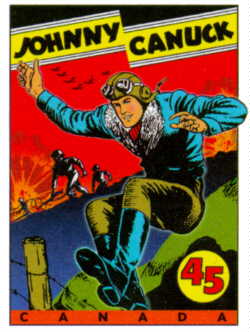
There are theories that canuck originated as a nickname for aboriginal peoples on the West Coast–the Chinook or the South Sea Islanders that worked in the French fur trade–but it looks as if it gained currency as that more generic term. Gary Wyshynski also reminds us that Johnny Canuck was a comic-book hero that fought Hitler in the 1940s:

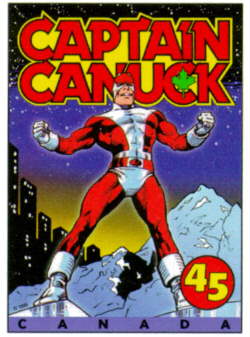
My own non-hockey canuck memories are of this Trudeau-era do-gooder:

Joe Biden Almost Died in Rochester

As recounted by Richard Ben Cramer in What it Takes, his book on the ’88 presidential election, it was in the early morning hours of February 9, after a speech at the University of Rochester followed by four hours of questions, that Joe Biden collapsed in his hotel room out by the airport. Miraculously, he survived the night and made it out of Flour City; back in Wilmington, doctors found evidence of a brain aneurysm and rushed him to Walter Reed Army Medical Center to operate. In May 1988, Biden was operated on for a second aneurysm.

Check out this timeline from The New York Times for more.