UB40 Goes Bankrupt

Well, at least it’s not an orchestra this time.

As reported in Digital Music News and the UK’s Daily MailUB40 recently declared bankruptcy. Lead singer Ali Campbell left years ago, alleging that the group’s management mishandled the group’s finances; I guess he was right.

Digital Music News points out that UB40 probably enjoys a “healthy royalty stream”–they’ve sold, apparently, 70 million records–but I don’t think anyone in that band ever wrote his own song. A couple of their famous covers:

What People Drink In the Famous Works of English Literature, Oliver Twist Edition

Gin and hot water seemed to be the cold-weather drink of choice for Dickens’s lowlifes in Oliver Twist. Mr. Bumble drank it, and so did Sikes. Fagin served it to Oliver.

Now that the nights are getting nippier, I thought I’d try it out. Let me tell you: gin and hot water is awful. It tastes like warm nail polish remover. Adding lemon juice helps, but not much. I found a recipe on Epicurious for a gin toddy that might be good.

I’m reading Treasure Island now, so I guess I’ll be drinking lots and lots of rum soon.

Philip Glass: "My Frontiers Are Behind Me"

In this short promotional video for the Brooklyn Academy of Music, Philip Glass talks a little bit about his increasing interest in the classical-music tradition as a source of inspiration:

This has been going on for a while. Some people love his symphonies, string quartets, and the like; others don’t. Back in the fall of 2010, Robert McDuffie toured the country with Glass’s nod to Vivadli, American Four Seasons. In the Chicago Tribune, John von Rhein called it, “a Glass half empty.” Mike Paarlberg loved the piece, mostly for not sounding like Koyaanisqatsi.

Across the pond, two different reviewers for the same paper had very different opinions, as Richard Guerin points out. In the London Telegraph, Ivan Hewett hailed American Four Seasons as “classic art”; Michael White called it “unmitigated trash.”

Here’s the last movement. Decide for yourself:

Finally, Something the iPad is Good for

A couple of weeks ago, The Atlantic posted an article about the iPad’s usefulness as a replacement for hard-copy sheet music,  and included this video of James Rhodes making a big deal of his decision to go electronic:

About a year ago, Gizmodo expressed similar sentiments, declaring that the iPad is “perfect” as a sheet-music reader. Over at the Technology in Music Education blog, there is a review of music readers for the iPad. 

The music readers for iPads go beyond the gimmickry of Smule apps, but I’m sure there’s something disconcerting about relying on a computer in a performance setting. Paper music can blow off the stand, but if a tablet computer loses power, you’re out of luck.

A Mess of Mushrooms in Nova Scotia

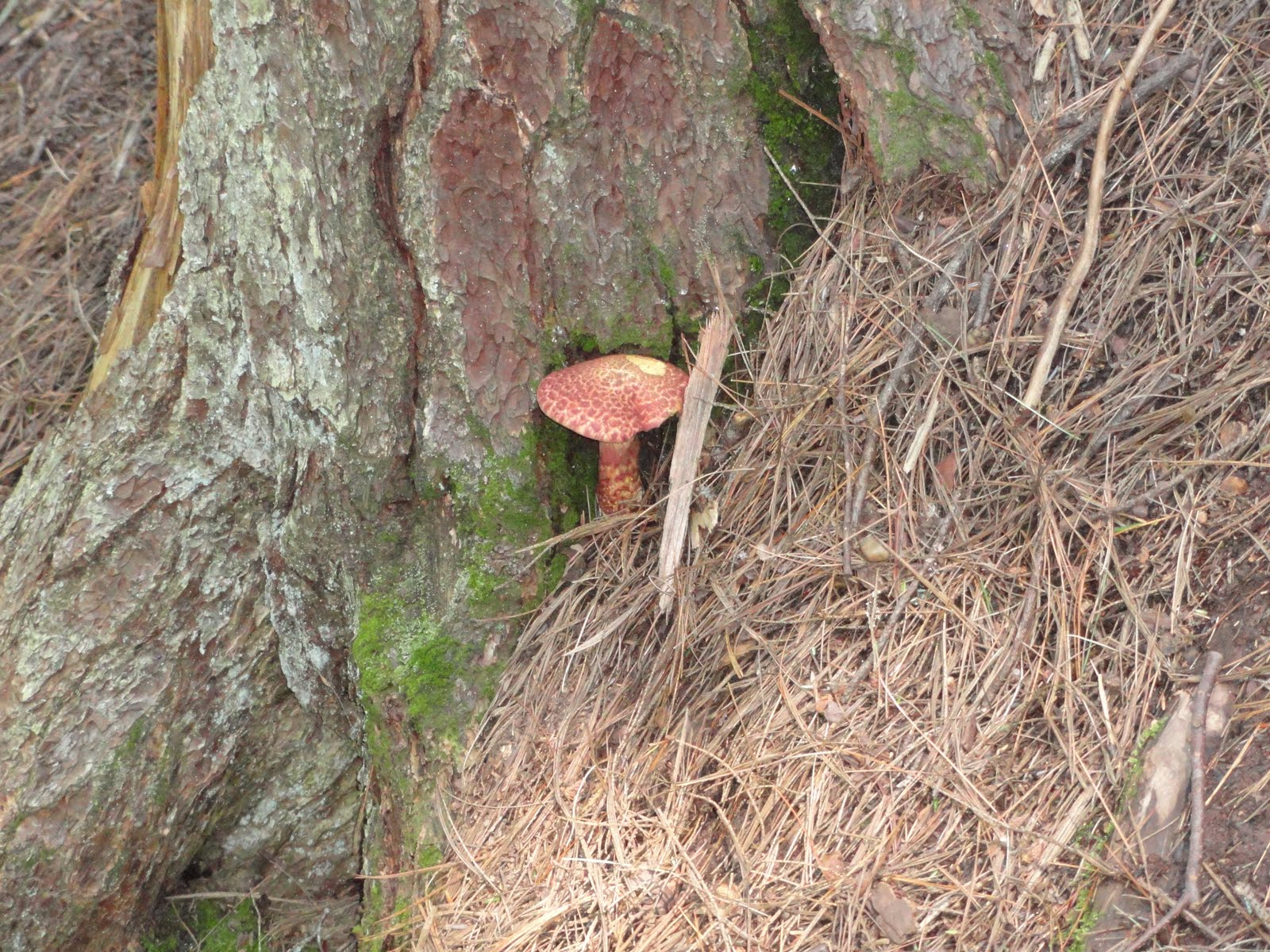
Apparently, Nova Scotia had gotten a lot of rain before we arrived for our visit, creating perfect conditions (moist, dark, and cool) within Truro’s Victoria Park for mushrooms. This one was my favorite: 
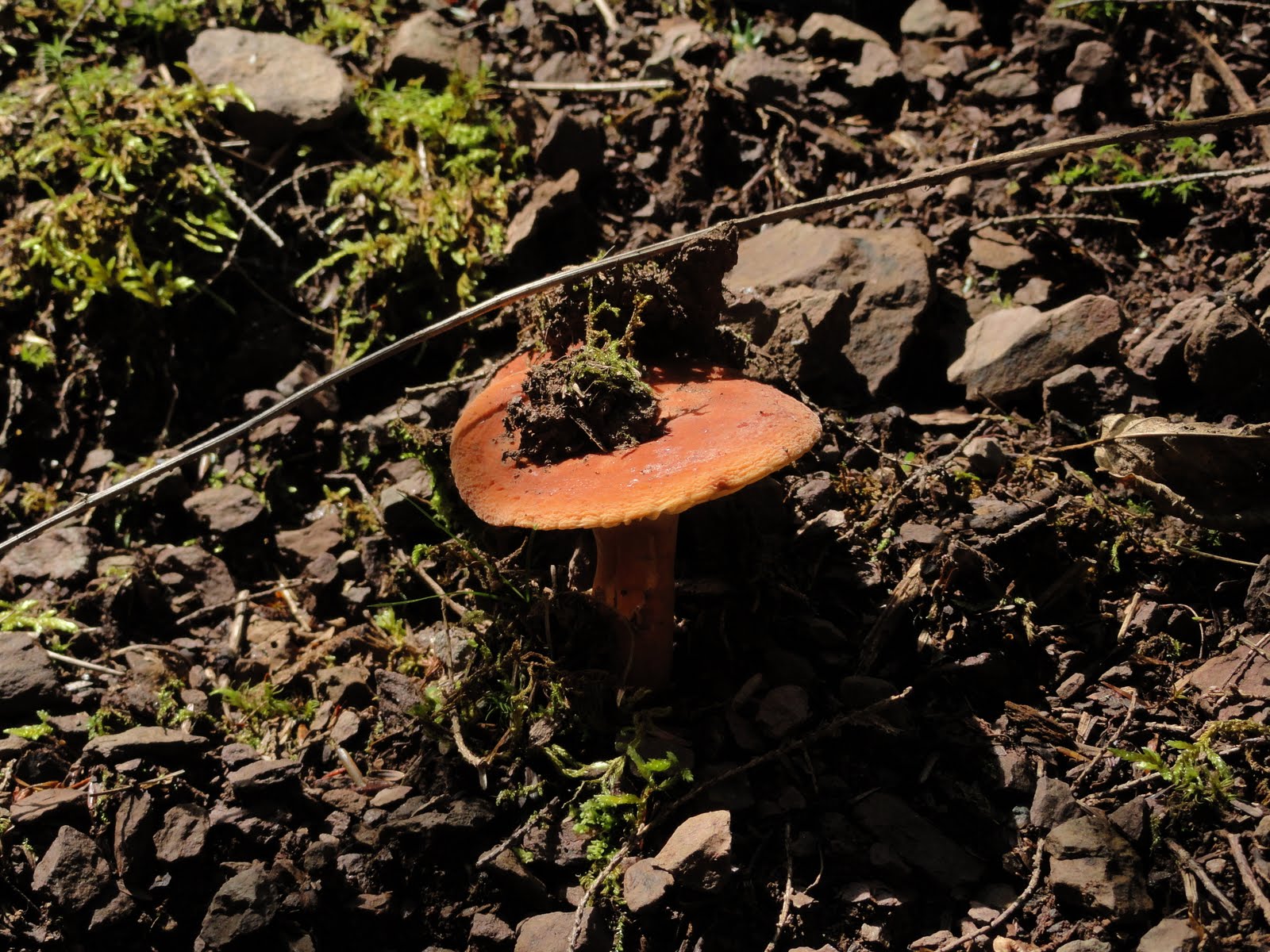
This one was striking: 
There were a lot of this kind: 

Here are some others:

No one else seemed as fascinated by their presence as I was, but I just don’t remember seeing such an array of mushrooms in the park, or anywhere else in Truro. If you know the names of these, I’d love to hear from you. 

"So Short, So Tight": A Yuja Wang Sexy Dress Round-Up

I just spent the last hour or so catching up on all that was written about the form-fitting orange mini-skirt Yuja Wang wore earlier in August at a Hollywood Bowl performance with the Los Angeles Philharmonic.

The Well-Tempered Ear has a good discussion goingWorry Later notes that, when you Google Yuja Wang, the second autocomplete suggestion is “Yuja Wang boyfriend.”

For reviewer Mark Swed, the dress, “so short, so tight” was the triple-X highlight of his evening.

In an article in the Los Angeles Times (which cites some books on the subject of fashion and music), organist Cameron Carpenter, known for his own outrageous outfits, was quoted as saying that “What people are missing here is that Yuja might want to be seen to be making, as many us do, a personal statement without having played a note.”

WQXR posted a podcast and slideshow; flipping through the WQXR photos, it looks as if what is scandalous is youth.

There’s more on blogs hosted by the Washington Post and LA Weekly, and on the Los Angeles Times‘s Culture Monster blog.

Our Latest Trip to Truro’s Victoria Park

Every time we go back to Nova Scotia, my family and I make a point of visiting Victoria Park in Truro.

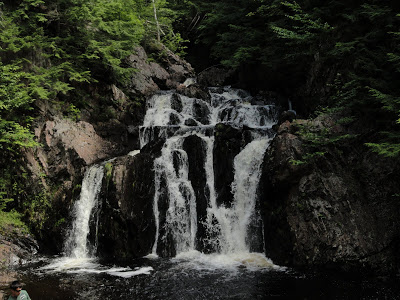
The centerpiece of the 400-acre park (with another 600 acres of protected woodland surrounding it) is Joe Howe Falls, named for the journalist, politician, and one-time opponent of Confederation best known for his successful self-defense on a libel charge in 1835.

From Victoria Park, Summer 2011

I’m probably a bad dad for letting (making) my children climb the 175 steps of Jacob’s Ladder, but this was something I looked forward to do when I came as a kid.

From Victoria Park, Summer 2011

Here’s the photo album of our latest sojourn to what is probably the most spectacular municipal park in the province (and that includes anything in Halifax):

Victoria Park, Summer 2011

Lawrence House: The Best Little Museum in Nova Scotia

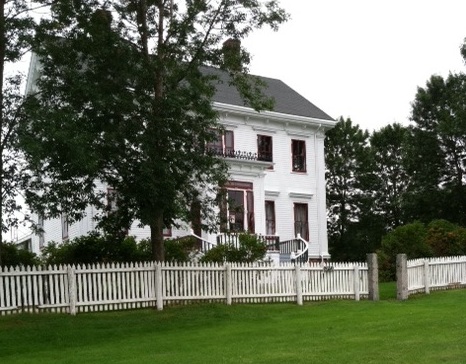
There are a lot of museums, historical sites, and memorials in Nova Scotia; it seems you can’t drive five miles without running into one. Of the ones I’ve stopped at, my favorite is Lawrence House in Maitland.

Back in 1967, the Nova Scotia government bought the one-time residence of shipbuilder W. D. Lawrence from his granddaughter, Abbie. On this day in 1971, it opened as a museum, commemorating a more prosperous time for the Fundy region and Nova Scotia as a whole.
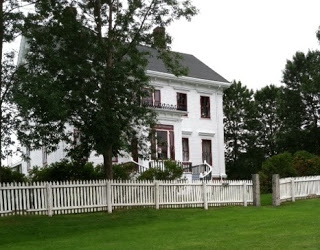

I went down to Lawrence House this afternoon with my wife and children to join in the 40th-anniversary celebration. We spent about two hours there with the remarkable, knowledgable staff, and learned a lot about the man who lived there and his time.

W. D. Lawrence’s claim to fame was his building  of the 250-foot, 2,500-ton “great ship.” Many of his contemporaries derided the Irish-born businessman’s plan to launch the W. D. Lawrence, not necessarily because it was a wooden leviathan powered by sail at a time when steam ships were emergent, but simply because the vessel was so big.

The ship, which set sail on its maiden voyage in 1874, is long gone, but the house is still there, as are the furnishings from the period, tools from the yards, and photos of the W. D. Lawrence in dry dock.

Fiercely proud of Nova Scotia–he built The Great Ship in part to showcase the province’s maritime might–Lawrence entered politics as a member of the House of Assembly in 1863. He was, along with Joseph Howe, a fierce opponent of Confederation (wise men).

Unlike Howe, Lawrence never came around to accepting Nova Scotia’s place in Canada. He always maintained that Confederation was “an idle vision calculated to check the future growth and prosperity of our country.” “Our country” was Nova Scotia, and those who wanted to join Canada were “traitors.”


Better Know a Composer: Harry Partch

In 1952, Mills College students banded together with professional musicians from around Oakland, taught themselves how to play Harry Partch’s array of strange, self-made instruments, and put on the composer’s King Oedipus.

Oedipus garnered a surprising amount of national coverage (surprising in that it got any at all), including (most likely) the newsreel footage that Open Culture posted on its website yesterday.

In this report, the announcer identifies cloud-chamber bowls “derived from atomic research” (!) and a 72-stringed kithara as byproducts of Partch’s search for “the elusive tones that exist between the notes of a regular piano.”

Whether you think Partch was “kooky,” as Open Culture puts it, or not (see the comments following the article), this newsreel is intriguing in that it takes Partch’s search for new musical resources seriously. The tone is not jokey or disbelieving, but straight-up, delivered with the same seriousness as the latest update on the virtual front of the Cold War.