Where Did Bluenose Come From, Anyway?

Bluenoser is now in the Oxford dictionary, and in this CBC.ca article Bill Davey is quoted providing  the usual etymology: 

One referred to the early Nova Scotian sailors who would be out in the cold weather and supposedly their nose would get cold and turn blue and the other one refers to the early settlers who would eat a  lot of blue potatoes and herring. 

But could the the term have a more religious bent? I looked up bluenose in a couple of American dictionaries; both the American Heritage Dictionary and Webster’s define it as a person who is particularly puritanical, who sticks to a strict moral code.

Is it possible that we Nova Scotians were known less for our seafaring toughness than for our self-righteous prudery?

Yet another Canadian nickname mystery.

Stompin’ Tom Connors is Dead

With humor and a trademark East Coast drawl, Stompin’ Tom Connors, like no other, mythologized Canadian life. He was born in New Brunswick and raised in Prince Edward Island; his first “hit” (as the Globe and Mail put it) was an ode to a PEI’s most famous export:

Years later, he wrote a song about a couple from Newfoundland that dumped a truck load of shit in the middle of Toronto (something any good Atlantic Canadian dreams of doing):

There were so many more songs, over so many years; he covered everything from a night out in northern Ontario to KD Lang.

A farewell note from Stompin’ Tom is on the homepage of his website.

Hockey Team With Racist Name Picks Song by Band with Racist Name as Their Fight Song

If Gary Webb were writing this post, that’s the title he’d come up with. But he’s not, so I’ll just say that this awesome song is what the Vancouver Canucks are using to start their games:

 
Fans of the team picked the song by online poll. For some horrible reason Nickelback was in the mix:

I think comparing these two songs really tells you everything about why Nickelback sucks.

Van Cliburn Died Today

It’s hard to get just how famous Van Cliburn was back in the years after he won the first Tchaikovsky Competition in Moscow (he got a ticker-tape parade in Manhattan, and his first album went platinum)–and what it meant to go into the heart of Soviet territory and show them how to play a signature work by their own legendary composer. His win was Paul Henderson’s goal in the 1972 Summit Series, Rocky’s pounding of Drago, Reagan’s “tear down this wall.”

I wrote about his performance of Tchaikovsky’s first concerto a few years back, and the best obituary I’ve seen today has been NPR’s. Take some time and listen.

If You Call Me "Canuck," Should I Be Offended, or Should I Put On Some Tights

Back on February 21, Rochester’s Democrat and Chronicle published this letter to the editor by Gary Webb of Victor:

A fine moment in Rochester Americans hockey history took place in the ’70s, when ownership ties were severed with the Vancouver Canucks. As a native Canadian, I am greatly offended by the use of the term “Canuck.” Forget about the Washington Redskins (Feb. 17 editorial, “Retire offensive sports mascots”); after all these years, why hasn’t Vancouver been required to change its extremely disrespectful, dehumanizing name?

If I didn’t know better, I’d say someone on the editorial staff really doesn’t like Gary Webb. The hyperbolic tone and false equivalence (there’s no way canuck is as offensive as redskins), the revisionist historical nugget (did the Americans really break it off with its NHL parent in a fit of righteous indignation?), the vague self-identification as a “native Canadian” (born there or First Nations?), the accusatory rhetorical question at the end: this is just an entertainingly embarrassing letter.

That said, it did make me wonder where canuck came from, and why Vancouver would use it as its hockey team’s nickname.

According to the Vancouver Canucks website, the team is named after a character with origins in 19th-century political cartoons:

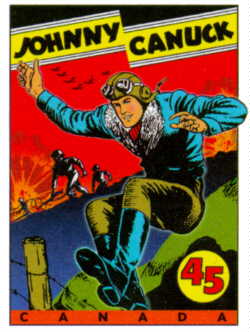
Johnny Canuck was created as a lumberjack national personification of Canada. he first appeared in early political cartoons where he was portrayed as a younger cousin of the United States’ Uncle Sam and Britain’s John Bull. Depicted as a wholesome, if simple-minded, fellow in the garb of a habitant, farmer, logger, rancher or soldier, he often resisted the bullying of John Bull or Uncle Sam. 

Roberto Luongo decorarted his goalie mask with a stylized version of that original Johnny Canuck for the 2011-12 season:

There are theories that canuck originated as a nickname for aboriginal peoples on the West Coast–the Chinook or the South Sea Islanders that worked in the French fur trade–but it looks as if it gained currency as that more generic term. Gary Wyshynski also reminds us that Johnny Canuck was a comic-book hero that fought Hitler in the 1940s:

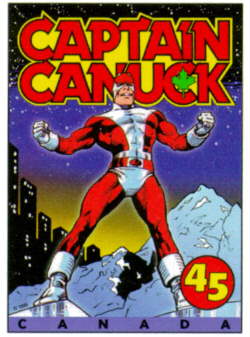
My own non-hockey canuck memories are of this Trudeau-era do-gooder:


Joe Biden Almost Died in Rochester

As recounted by Richard Ben Cramer in What it Takes, his book on the ’88 presidential election, it was in the early morning hours of February 9, after a speech at the University of Rochester followed by four hours of questions, that Joe Biden collapsed in his hotel room out by the airport. Miraculously, he survived the night and made it out of Flour City; back in Wilmington, doctors found evidence of a brain aneurysm and rushed him to Walter Reed Army Medical Center to operate. In May 1988, Biden was operated on for a second aneurysm.

Check out this timeline from The New York Times for more.

Cheesy Classical Music You Should Know: Fanfare for the Common Man

In 1977, Emerson, Lake, and Palmer recorded their own, nine-minute blues-jam version of what is probably Aaron Copland’s single most famous piece. The cover was a big hit–perhaps also the nadir of art rock–and CBS used it as the opening theme for its Saturday-afternoon sports show, CBS Sports Spectacular, a low-rent version of Wide World of Sports:

Outside of the concert hall, this is how most people (at least those of a certain baby-boomer age) have come to know Fanfare for the Common Man; that’s a shame, because inside of the concert hall, its distinctive, sweeping opening always exhorts goosebumps.
Copland wrote the piece on commission in 1942 from Eugene Goosens, who at the time was the music director of the Cincinnati Symphony Orchestra. Goosens contacted 18 composers to write fanfares that would be “stirring and significant contributions to the war effort” (this was only shortly after Pearl Harbor). He ended up using nine of them for Cincinnati’s 1942-43 season, including Copland’s, which is pretty well the only one still heard today.

A few years later, Copland used Fanfare for the Common Man in the finale of his Third Symphony, which you can hear here.

Bily Corgan, Wrestling, Furniture–And Star Wars Too

I was going to write about Aaron Copland tonight, but instead I’m posting this:

Furniture, professional wrestling, Smashing Pumpkins: three things from my (sort of) youth to which I am distinctly ambivalent. They all together quite nicely here.

Resistance Pro Wrestling is but one of the many (sort of) business ventures Billy Corgan’s been involved with lately. I’m not seeing any tour events posted on Resistance Pro Wrestling’s site, but there are a bunch of videos, if you’re interested. Here’s an article on its founding and Corgan’s involvement.

Walter E. Smith is a Chicago-area furniture store that clearly takes pride in its commercials, including this piece of Star Wars promotional fan fiction:

Troops, it ain’t:

The Problem with Glorifying Rural Life

According to an article on the Poverty Reference Bureau website based on the work of William O’Hare, rural poverty is more prevalent than urban poverty; just under 24% of children in rural areas live in poverty (as of 2007), compared with around 18% in urban areas. Rural poverty is also tenacious:

… while many people move in and out of poverty as their circumstances change, spells of poverty last longer for rural children. They are the “forgotten fifth” of poor children because most programs and policies to help the poor are focused on urban areas. 

Appalachian Spring, listening to “Flyover State,” that farmer ad on the Super Bowl: all help us feel a little bit better about the reality of this situation. They tell us that it’s OK, that the grit and ingenuity of these (white, they mostly are white) people will carry the day, that they’ll lift themselves out of the rut, carry themselves through hard times.